


Reservoirs for Nature at Mount Bold Reservoir Reserve

More than 34,000 seedlings are being planted across 89 hectares of previously cleared native grassy woodland at Mount Bold Reservoir Reserve during Stage 1 of Reservoirs for Nature.

Native grass restoration at Mount Bold will be delivered in a future stage following ongoing weed management to ensure the best chance of long-term success.

Restoring native vegetation

More than 130 species of trees, shrubs, grasses and groundcovers are being established across different vegetation communities at the Mount Bold project sites.

This map shows the vegetation communities being restored as part of the project.
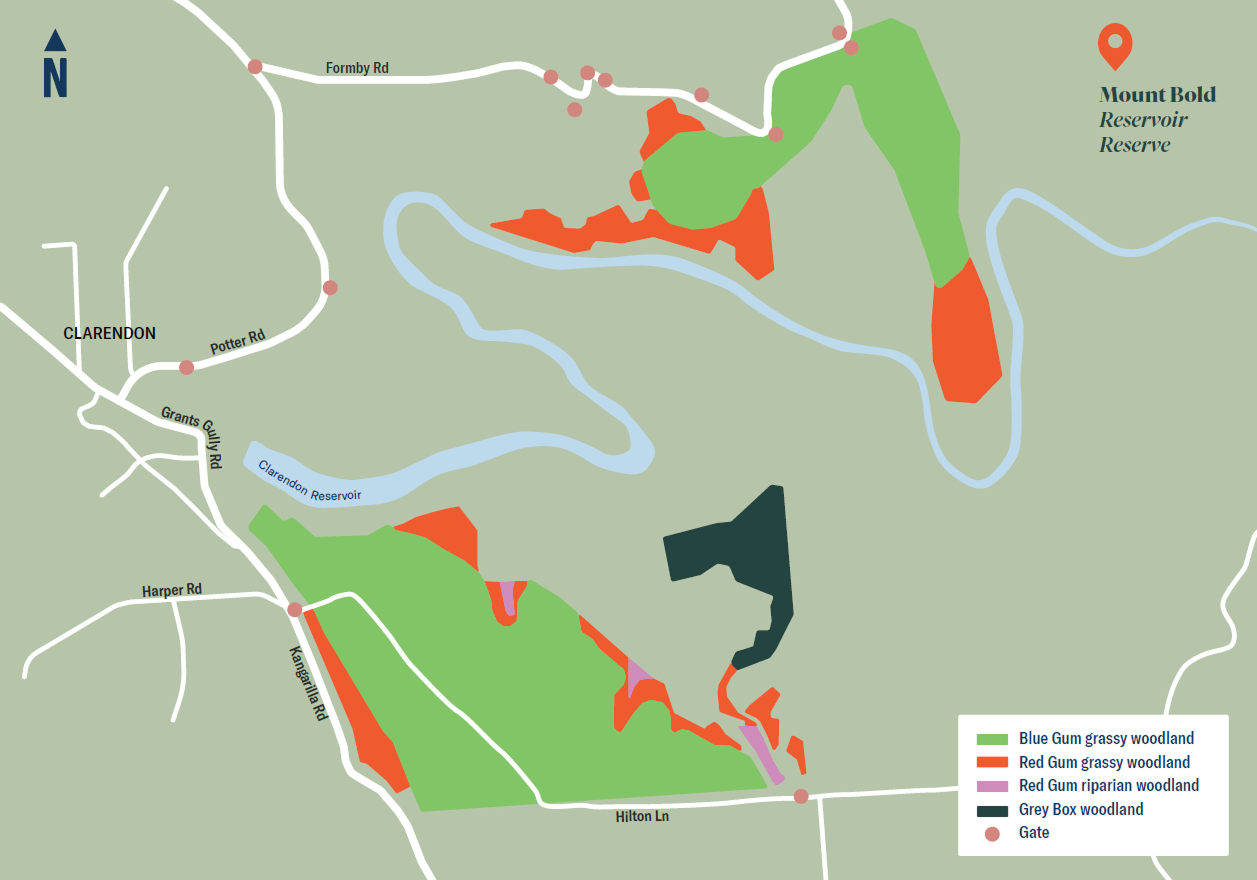
This map shows the Mount Bold Reservoir Reserve Reservoirs for Nature project area near Clarendon. Coloured polygons identify the vegetation communities being restored across several planting sites around the reservoir reserve. Green areas represent Blue Gum grassy woodland, orange areas represent Red Gum grassy woodland, pink areas represent Red Gum riparian woodland, and dark grey areas represent Grey Box woodland. The map also shows the surrounding road network, including Formby Road, Potter Road, Grants Gully Road, Kangarilla Road, Harper Road and Hilton Lane, along with reservoir waterways and access gates. Multiple restoration sites are distributed across the reserve, demonstrating the range of native vegetation communities being established as part of the Reservoirs for Nature program.

Planning and design

Our teams used Geographic Information System (GIS) technology to digitally map every planting, ensuring the restored vegetation reflects natural patterns while meeting carbon sequestration requirements.

The plants will be established across more than 2,100 individual mounds, using a carefully designed planting pattern that reflects the reserve's natural landscape.

What we're planting

Interested in what we're planting?

Our printable planting lists for Mount Bold show species commonly available from specialist native nurseries.

Download the Mount Bold native plant species list PDF (947Kb)

A long-term commitment

Ecological restoration takes time.

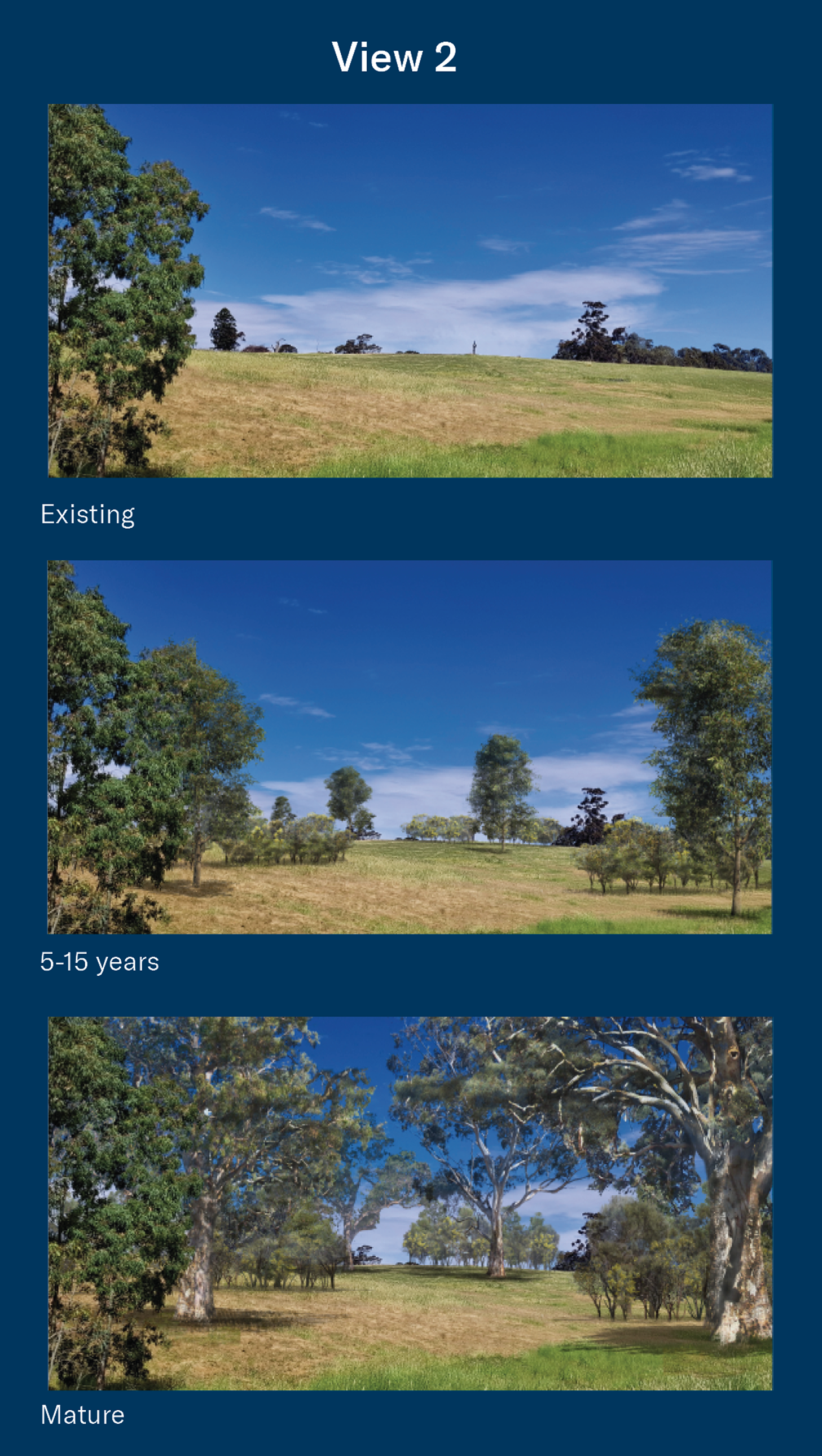
The illustrations below show how one of the Reservoirs for Nature planting areas, visible from Kangarilla Road, Clarendon, will gradually change as trees, shrubs and grasses grow and establish over the next 25 years.
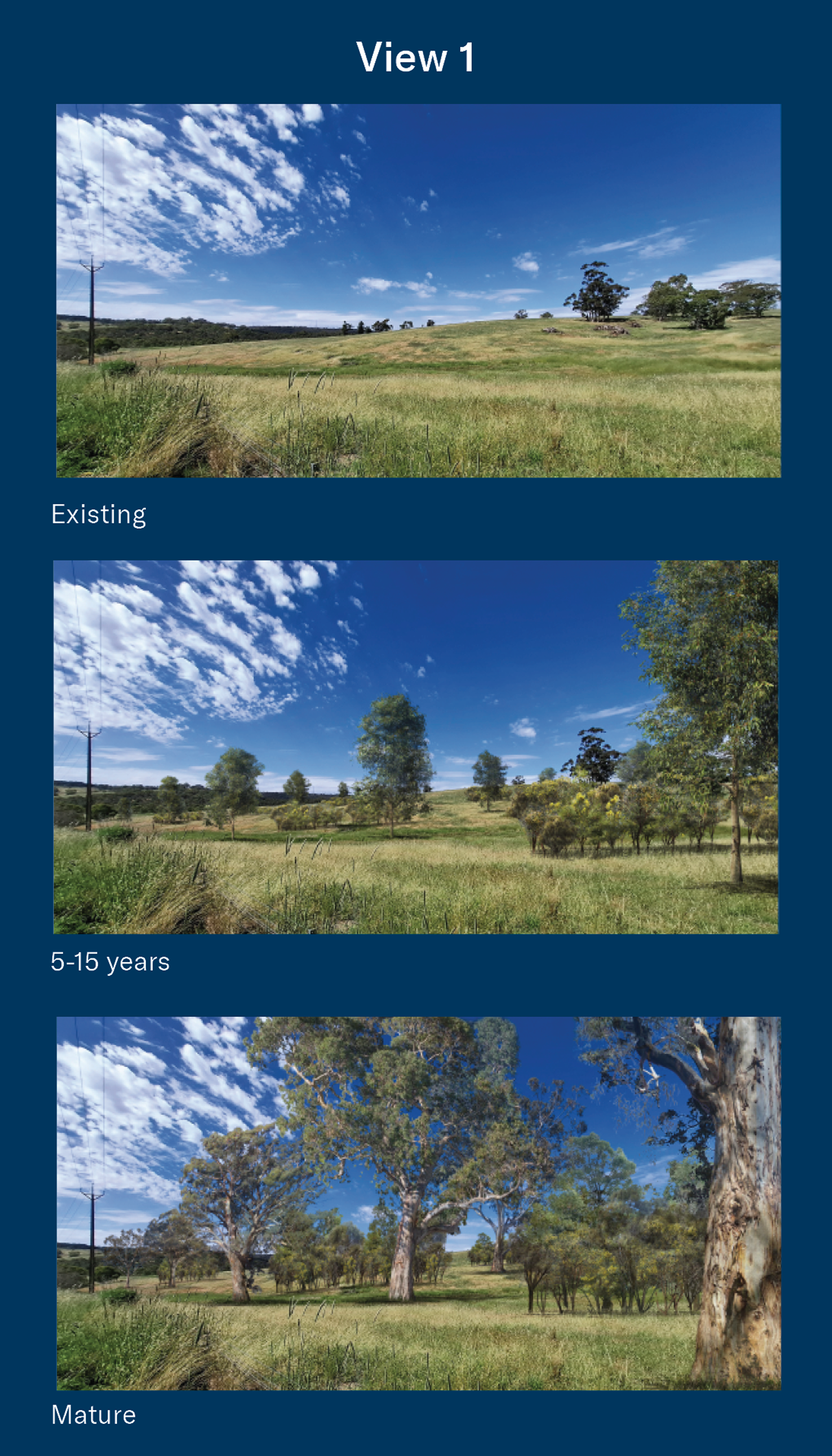
This image series, labelled "View 1", presents a visualisation of how a Reservoirs for Nature planting area at Mount Bold Reservoir Reserve is expected to change over time. Three landscape views are shown from the same location looking across an open grassy hillside. The first image, labelled "Existing", shows a largely open grassland landscape with a small number of established trees, utility poles along the left side of the scene, and low rolling hills in the distance. The second image, labelled "5–15 years", illustrates the site after restoration plantings have become established, with additional young trees and shrub vegetation visible throughout the landscape while maintaining the open character of the area. The third image, labelled "Mature", shows the same location after the vegetation has reached maturity, featuring larger established trees, a more developed canopy and denser native vegetation across the hillside. Together, the images demonstrate the gradual transformation of the landscape over time as Reservoirs for Nature plantings grow and establish over the next 25 years.

This image series, labelled "View 2", presents a visualisation of how a Reservoirs for Nature planting area at Mount Bold Reservoir Reserve is expected to change over time. Three landscape views are shown from the same location looking across an open grassy hillside. The first image, labelled "Existing", shows a gently sloping grassland with a small number of established trees on the horizon and along the left edge of the view. The second image, labelled "5–15 years", illustrates the site after restoration plantings have become established, with additional young trees and shrub vegetation appearing across the hillside while retaining open grassed areas. The third image, labelled "Mature", shows the same landscape after the vegetation has reached maturity, featuring larger established trees, a more developed canopy and denser native vegetation throughout the planting area. Together, the images demonstrate the gradual transformation of the Mount Bold landscape over time as Reservoirs for Nature plantings grow and establish over the next 25 years.

Stay updated

To receive updates about Reservoirs for Nature at Mount Bold reservoir reserve, visit our Water Talks page.